Matters of the Heart & Soul

In the Name of Allâh, the Most Beneficent, the Most Merciful
| "It is He who sent to an illiterate people a messenger from amongst themselves, reciting to them His signs and purifying them and teaching them the Book and the wisdom even though before they were clearly in error." [Soorah al-Jumu`ah (62):2] |
Mukhtasar Minhaj al-Qasidin
Author: Ibn Qudamah | Volumes: 4 This work has taken Important Points and Objectives from The Minhaj Al-Qasidin of Ibn Al-Jawzi which in turn is a Summary of that Magnum Opus of Imam al-Ghazali The 'Ihya Ulum Ad-Din'. however, Ibn Al-Jawzi Compiled the book free from weak or fabricated Hadith and then Ibn QudamaH summarised it further and added his invaluable comments. The Arabic is in One volume, however the English translation by Dar As-Sunnah comprises of 4 separate books |
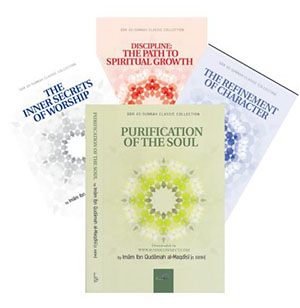
Purification of the Soul
Author: Jamaal al-Din Zarabozo | Pages: 360 | Size: 28 MB For a number of reasons, this is a very important time to be writing a book of this nature. First, the concept of purification of the soul as a whole is and always will be central to the message of Islam and to the welfare of humans, both in this life and the Hereafter. Indeed, it was a main mission of the messengers and prophets themselves. Second, there is a very strong need to shed light on the correct path of purification as delineated by the Quran and Sunnah- free of the foreign influence, deviations and heresies that have found their way into the realm of the religion and have caused a great deal of harm. The path described by the Quran and Sunnah is the only path that can result in a true purification of the soul. Indeed, it is the only path that is truly consistent with the purpose for which humans were created. Hence, any discussion of purification of the soul must rely heavily and exclusively on the Quran and Sunnah and what can be correctly derived from those two sources. |
Healing Body & Soul
Author: Amira Ayad | Pages: 360 | Size: 21 MB Diet & nutrition Stress management Detoxification Neurolinguistic programming Exercise & physical therapy Lifestyle changes The power of prayer Like other guides to good health, Healing Body & Soul: Your Guide to Holistic Wellbeing Following Islamic Teachings advocates abandoning an unhealthy diet and altering a sedentary lifestyle, but this book goes beyond the mere physical aspects of health. |

Captured Thoughts
Author: Ibn al-Jawzi | Pages: 1057 A Collection of Thought-Provoking Gems, Persuasive Eye Opening Wisdoms, Insights about Religion, Ethics and Relationships It is often the initial thoughts passing through our minds that have within them sparks of genius reflection. Imam Ibn al-Jawzi recognised the importance of capturing such thoughts before they slip through our conscious and become forgotten, so he did exactly that; he wrote down his ideas, musings and contemplative theories and compiled them in a distinctive work he entitled: Saydil Khatir . |
Disciplining The Soul
Author: Ibn al-Jawzi | Pages: 112 | Size: 2 MB The author addresses many spiritual diseases - such as envy, greed, uncontrolled lust, sexual desire, arrogance, gluttony, anger, stinginess, extravagance, vanity and attachment to this world. He also discusses the qualities that the seeker of God must acquire - such as love, self discipline, humility, self-criticism, improvement of character, patience and truthfulness. In a simple yet effective way he shows the wayfarers how to cure their spiritual diseases and acquire the necessary qualities for their journey to Allah. |
Disturber Of The Hearts
Author: Ibn al-Jawzi | Pages: 112 | Size: 3 MB The discerning scholar is adept at diagnosing the various spiritual illnesses resulting from sins, and treating the malaise in the heart. If he finds a person failing into despair, he tries to ignite the spark of hope in the heart. if, on the other hand, he see that one in a reckless and fearless state, he works to in still the fear of Allah in his heart. Thus, the scholar treats sickness by using its opposite as a cure. Ibn al-Jawzi, has collected herein ominous narration, warnings against wrongdoing, and stories of forbidding and punishment that shake the hearts from their slumber. The self-assured one becomes anxious; the heart-hearted becomes soft; the dried tear ducts start to flow; slothful becomes motivated. |

Seeds Of Admonishment And Reform
Author: Ibn al-Jawzi | Pages: 224 | Size: 7 MB Seeds of Admonishment and Reform by Ibn Al Jawzi This is the fifth instalment in the book series, of the illustrious and inimitable scholar of the sixth century Hijri, Imam Ibn al-jawzi, and May Allah mercy upon him. The author penned this rare and deeply thought-provoking work with remarkable prose, accompanied with intense imagery designed to impart profound points of benefit harvested from the Quran and Sunnah. His lessons are uniquely arranged and gleam with exquisite expressions- deigned to council the intellect to reflect, and heart to reform. |
Awaking From The Sleep Of Heedlessness
Author: Ibn al-Jawzi | Pages: 64 | Size: 3 MB There are those who submit to Allah's order and achieve success. Others are wasteful of time and thereby loss and regret. Whoever lives his life in accordance with Allah's commands, will be rewarded handsomely with multiplied profits beyond imagination. The corrupt one who acts contrarily to Divine Pleasure will be destroyed. |
|
8 Steps To Happiness
Author: Abu Abdur-Rahman Nasir Al-Sadi | Pages: 80 | Size: 17 MB Everyone chases after happiness, yet few fully recognise what it is or whence it comes from. Happiness isn t a destination but a journey needing certain inner qualities and a right state of mind to experience and reap. It s neither sold as a commodity nor can be bought, except through carefully crafting one s character and following a plan of action. For indeed, those who don t plan will fail to realise desired results. The Messenger of Allah (peace and blessings be upon him) said, Those among us (destined to be) from people of happiness [in the Hereafter] will (find it easy to) enact deeds of people of happiness... [Sahih Al-Bukhari, #4948]. |

Inner Dimensions of the Prayer
Author: ibn Qayyim Al-Jawziyyah | Pages: 96 | Size: 4 MB Today's pace of life has created an imbalance in many people's priorities, especially in diminishing spiritual fulfilment. Seldom do we find contentment or a sense of purpose in our daily routine; Masjid's are running on the hollowness of its congregations, homes have become dry of personal uplift - thisv is due to a distinct lack of understanding of what our prayer means and what it demands of us. |
Mysteries of The Soul Expounded
Author: Abu Bilal Mustafa Al-Kanadi | Pages: 136 | Size: 6 MB The subject of this treatise - the nature, essence, and circumstances of the human soul - is fascinating to people of all ages, faiths, and walks of life. It covers the issue of death and what happens after it. Due to the nature of this exciting topic, one who researches the subject is faced with an enormous amount of conflicting information. Therefore, in order to arrive at sound dependable conclusions regarding the soul, one must carefully read and analyze the available material and evaluate it according to stringent criteria. This is of utmost importance since it bears directly on one's belief. |
Diseases of the Hearts & Their Cures
Author: Ibn Taymiyyah | Pages: 156 | Size: 5 MB Actions are distinguished, one from the other, with respect to their excellence in the Sight of Allaah in accordance with the condition of the heart, not by their number or form, but rather due to the strength of the caller, his truthfulness, his sincerity and the extent to which he prefer Allaah over himself Al-Haafidh ibn Hajr al-Asqalaanee, may Allaah have mercy upon him and provide us with his knowledge, said: The heart has been singled out for this because it is the leader of the body, and through the purification of the leader the subjects become purified, and with his corruption they become corrupted. So if you, O servant of Allaah, wish to cure your heart then it is upon you to be truthful with regards to seeking refuge with Allaah and putting your trust in Him, to pray a great deal of supererogatory prayers, to perform the actions of obedience to Allaah frequently, to pray the night prayer while the people are sleeping, and to treat your heart by making it continuously stick to the remembrances and by befriending only the righteous and to frequently recite the Qur aan. And Allaah will indeed allow all of this to be preserved by him. Taken from the Compiler s Foreword |
Ibn Taymiyyah s Essay on The Heart
Author: Ibn Taymiyyah | Pages: 82 | Size: 10 MB There are many books currently in circulation concerning the purification of the heart and soul. This text is a welcome addition to the Islamic English library as it takes a unique approach to the subject. The author of this brief treatise, Ibn Taymiyyah, systematically dissects the primary role of the heart in the life of a true Muslim. After discussing the heart s purpose and function, the author discusses the prominence given to the heart in all affairs by Allah and His Prophet (pbuh) in the various texts of the Qu ran and Sunnah. He then goes on to identify the right of the heart in relationship to Allah; remembrance and consciousness of its Lord. Ibn Taymiyyah also categorized the various types of hearts that exist relative to their states and conditions and concluded his treatise with the worst state for the heart to be in, lost, along with advice on how to avoid it. |

The Purification of the Soul
Author: Ibn Rajab/Ibn Qayyim | Pages: 170 | Size: 3 MB According to the earliest sources, compiled from the works of Ibn Rajab al-Hanbali, Ibn al-Qayyim al-Jawziyyah and Abu Hamid al-Ghazali, collected and arranged by Ahmad Farid. One the most concise references that can have a big impact on you once you read it. Topics gone into detail include symptoms of the heart's sickness and signs of its health, doing without the pleasures of this world, perseverance, complete reliance on Allah, the life of this world, to mention only a few. Excellent read!! |
Heaven's Door
Author: Ibn Rajab/Ibn Qayyim | Pages: 50 | Size: 1 MB By Ibn Rajab al-Hanbali, Al-Jawziyya & Abu Hamid al-Ghazali. Continuation of the popular first book "The Purification of the Soul," taking the works of Ibn Rajab al-Hanbali and Imam Abu Hamid al-Ghazali, two towering scholarly figures of Islamic history, and incorporating their work into this compilation. Discusses :Enjoining good and forbidding evil, Remembering death, Punishment and blessings in the grave, Day of Rising, Heaven and hell, Counsel on death |
|
Spiritual Disease And It's Cure
Author: Ibn Qayyim | Pages: 260 | Size: 11 MB The Imam was asked a long question of which a part was - What is the opinion of the scholars regarding a man who is afflicted by a disease, and knows that if it should continue it would damage his life? The Imam Quoted the Hadith from Sahih Bukhari The prophet (S) said: 'Allah has appointed a remedy for every disease He has sent down' Imam Ahmad reported on the authority of Usamah bin Shareek that the ' Prophet (S) said Allah has not made a disease without providing a remedy for it, wih the exception of one disease, namely old age' This Applies to the medicine for the heart, soul and body. The well being of the servant's heart, is far more important than that of his body, for while the well being of his body enables him to lead a life that is free from illnesses in this world, that of the heart ensures him both a fortunate life in this world and eternal bliss in the next. |
|
The Remembrance of Death and the Afterlife
Author: Imam Qudamah al-Maqdisi | Pages: 66 If a person had no other distress or anguish before them except death, this would be sufficient to disturb their livelihood. Death is the reality of every soul and it is the destroyer of all pleasures. How strange is it indeed that a human is so immersed in worldly life; it s delights, glitter, glamour, fame and power that they are heedless of a truth which is about to strike at any time, with no return. |

Expecting the Best from Allah
Author: Abu Muhammad al-Maqdisi | Pages: 14 | Size: 1 MB In accordance with how good your expectations of and hope in Allah are and how truthful your reliance and trust are in Him, Allah will not betray your hopes in the least, as He does not betray the hopes of those who hope and does not cause any effort to go to waste. |
The Tree of Faith
Author: Abdur Rahman al-Sadi | Pages: 91 | Size: 1 MB Allah, the Exalted says, Do you not see how Allah sets forth a metaphor of a good word: a good tree whose roots are firm and whose branches are in the sky? It bears fruit all the time by its Lords permission. Allah sets forth metaphors for people so that hopefully they will pay heed.? [Ibrahim (14): 24-25] |

The Most Excellent Manner of Seeking Forgiveness
Author: ibn Abdul Muhsin Al Abbaad | Pages: 31 | Size: 1 MB My noble brothers, this lecture, upon the topic of seeking al-Istigfaar - asking for forgiveness for ones sins - deals with one of the most important topics to which the Muslim should give attention in his life and for which he should have the utmost concern. Included in it is the explanation of a tremendous way of seeking forgiveness, from amongst the various forms of seeking forgiveness that occur in the sunnah of the Prophet. We ask Allaah that it should be beneficial to us and a blessing for us. There are many texts to be found in the Book of Allaah, the Majestic and Most High, and in the sunnah of His Messenger that encourage one to seek forgiveness: texts commanding it, showing its excellence, showing the excellence of its people and of those who are constant in it. |
The Ill-Effects of Sins
Author: ibn Uthaymeen | Pages: 19 | Size: 1 MB This short booklet is a translation of a khutba (sermon) delivered by Shaykh Muhammad ibn Salih on the 12th of Muharram in the year 1411AH. Which has been published in Arabic under the title: Athar ul-Ma aasee Alal Fardi Wal Mujtama. |

|
The Exquisite Pearl
Author: Shaykh 'Abd al-Rahman al-Sa'di | Pages: 35 | Size: 12 MB
The Exquisite Pearl : The Journey to Allah and the Home of the Hereafter . Of all the faculties man has been endowed with, none excels the heart in importance and nobility. For the heart is both the seat of intelligence and understanding, and the locus of faith and spirituality; it is the quintessential faculty by which man may come to know his creator, and seek nearness and intimacy with Him. The heart's spiritual sustenance lies in its being receptive to the effusions of divine grace and guidance, without which the veils that cover it will continue to corrupt its primordial purity, gradually rendering it dysfunctional! Each veil- a metaphor for heedlessness, sins and distraction- that is melted away by the rays of faith and spiritual endeavour, allows vital qualities such as love of Allah, as well as hope, fear, remembrance, and reliance upon Him, are referred to in the religious vocabulary as spiritual stations; only when the heart embraces these stations is it said to be truly sound. The Majestic Qur'an informs:
|
Stories of Repentance
By Muhammad Abduh Mughawiri Who among us does not sin? And who among us does all that is required of him in the religion? It is an undeniable fact that we all have shortcomings; what distinguishes us from the others, what raises some of us above others, is that successful ones among us are those who repent their sins and ask Allah to forgive them. It is truly encouraging to know that the door to repentance is always open. Glad tidings, then, to every Muslim who constantly hastens to repent to Allah and to ask for his forgiveness. |

Tawbah: Turning To Allah in Repentance
Every human is susceptible to make mistakes. The Qur'an gives them hope and teaches them to ask Allah to take care of them and guide them to the right path. Tawbah: Turning to Allah in Repentance by Ibn Qayyim al-Jawziyyah deals with the spiritual side of tawbah without neglecting the physical requirement and conditions. It is taken from the book Madarij Al-Salikin Bayn Manazil Iyyaka Na'budu Wa Iyyak Nasta'in (The Stages of the Travellers Between the Stations of Only You We Worship and Only You, We Seek Help From), which is one of Ibn Qayyim's best works. Supported with extracts from the Qur'an and quotes from the Messenger of Allah (SAW) the author deals with apparent and deeper aspects of repentance, and the true essence of repentance and its conditions. |
Revive Your Heart
Revive Your Heart is a call for spiritual renewal and an invitation to have a conversation with one of the worlds most recognizable voices on Islam, Nouman Ali Khan. This collection of essays is disarmingly simple, yet it challenges us to change. To revise our actions, our assumptions and our beliefs so we can be transformed from within, as well as externally. |
ALLAH LOVES
In Allah Loves.. Omar Suleiman explores who and what Allah loves so that we may become one of those who are beloved to Him. The Prophet Muhammad said that one of the supplications of Prophet Dawud was, "O Allah I ask You for Your love and the love of those that love You and all of those actions that would bring me closer to being loved by you." |

Love & Happiness
Things fall apart. And they break sometimes. Like many of you, my journey hasn't always been easy. Pain is very real. And so is loss. Sometimes it's hard not to let the weight of what we carry--or the memory of what we've lost--take over. Many of us know the reality of struggle, and so many people suffer in silence. It's hard. It's hard not to give up when we face the repeated disappointments of life. Like some of you, I've known loneliness. I've known defeat. I've fallen many times chasing mirages, and broken many bones making castles in life's fading sands. |

Healing the Emptiness
This book is about finding strength in God and in our capacity to be both human and beautiful--both flawed and inspired. It is a journey to the understanding that we are flawed by design so that we can find strength and beauty in relying entirely on the Flawless. This book is about learning why we suffer and how to stop our pain from destroying us. It is a spiritual and psychological manual for healing and growth through our pain. It is about finding peace and purpose, no matter what we've been through. |

Timeless Seeds of Advice
Timeless Seeds of Advice: The Sayings of Prophet Muhammad, Ibn Taymiyyah, Ibn al-Qayyim, Ibn al-Jawzi and Other Prominent Scholars in Bringing Comfort and Hope to the Soul A selection of beautiful and practical pieces of advice from the Quran, the Prophet PBUH and Islam s great scholars on repentance, guidance and purification. This book is designed to serve as a source of hope and strength for those going through difficult times, while providing numerous important pieces of knowledge and guidance for all readers and all times. |
This Is Love
All of us are looking for love. We carry enough pain, frustration, and doubt in us to crush us. And only the comforting embrace of love can save us. We look around and see a world embroiled in so much greed, racism, inequality, and cynicism. We have become more suspicious of each other, more intolerant, and crueler. We need change. Many sing the praises of love and tout it as the answer. But they do not tell us what love is, what to love, and how to love it? Each imagines it and lives it differently. Which one is right? Which path should we follow? |

Heart Therapy
Depression, anxiety and loneliness are common problems today, Envy, greed and materialism invade our hearts and poison our relationships and lives. Racism, warfare and economic deprivation the symptoms of a greater spiritual weakness are destroying our world. What is the solution to all of these problems? We need a spiritual awakening, a healing of the hearts that can heal the world. We need to rediscover our iman. |
A Treatise in Condemnation of Hardness of the Heart
Author: Ibn Rajab | Pages: 97 | Size: 2 MB The importance of this topic is highlighted by the supplication of the prophet S.A.W where he sought refuge with Allah from the hardness of the heart. He S.A.W Said: " O Allah I seek refuge with you from feebleness, laziness, stinginess, cowardice, senility, hardness of heart, heedlessness, destitution, humiliation and privation. And I seek refuge with you from poverty, disbelief, Shirk, disobedience, opposition to the truth, hypocrisy, seeking fame and showing off. And I seek refuge with you from deafness, dumbness, insanity, leukoderma, leprosy and all chronic diseases." |
|
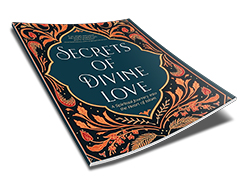
Secrets of Divine Love
Author: A Helwa | Pages: 369 | Size: 100 MB Secrets of Divine Love draws upon spiritual secrets of the Qur'an, ancient mystical poetry, and stories from the world's greatest prophets and spiritual masters to help you reignite your faith, overcome your doubts and deepen your connection with God. Through the use of scientific evidence, practical exercises, and guided meditations, you will develop the tools and awareness needed to discern and overcome your negative inner critic that prevents you from experiencing God's all-encompassing love. The passages in this book serve as a compass and guiding light that returns you to the source of divine peace and surrender. Through the principles and practices of Islam, you will learn how to unlock your spiritual potential and unveil your divine purpose. Secrets of Divine Love uses a rational, yet heart-based approach towards the Qur'an that not only enlightens the mind, but inspires the soul towards deeper intimacy with God. |
|
With the Heart in Mind
Author: Mikaeel Ahmed Smith | Pages: 171 | Size: 1 MB The author suggests that by studying the Emotional Intelligence of the Prophet Muhammad (s.a.w.), we improve the quality of our relationships with the people around us and we, like the Prophet (s.a.w.), can become catalysts for change around us. Emotional Intelligence within the author's model of intelligence is a tool by which the message of God is transferred to humanity. With the Heart in Mind reminds us that "To be loved by people is half of intelligence." |

Authentic Interpretation of the Dreams
Author: Ahmed Fareed | Pages: 113 | Size: 2 MB Discusses the following topics: Meaning and types of dreams Benefit of a good dream Etiquette of seeing a dream Categories of interpreting dreams Interpreting dreams from a Qur'anic perspective Discussion of dreams which include such abstracts as ships; wood; stones; disease; eggs; water; meat; entry of a king; ascension to the sky; adhan; ruku; sujud; praying with the wrong Qiblah; day of judgment; entering paradise, parents; salaah (prayer); hellfire; old age; perfume; shirt; sleep; blindness; and much more. Relevant hadith concerning dreams |

The Dreamer's Handbook
Author: Muhammad al-Jibaly | Pages: 359 | Size: 4 MB This book starts by presenting a spiritual understanding of sleep from the Islamic viewpoint, which is followed by guidelines for recommended evening, pre-sleep, night, and morning acts of worship. The conceptual understanding of dreams is laid out next, followed by an analytical study of dreams in the Quran, and of dreams seen by the Prophet Muhammad (PBUH) and by his companions (R). The rest of the book deals with dream interpretation, its correct rules and procedures, drills to help understand these rules, and a large glossary of interpreted dream symbols. This, we hope, fulfills two important goals regarding sleep and dreams: It establishes their understanding upon the strong foundation of the Quran and Sunnah, and it eliminates a great deal of superstition that surrounds them. Indeed, from Allah (SWT) alone we seek help and acceptance. |
Interpretation Of Dreams
The Present book tackles the issue of the interpretation of dreams in the light of the Quran and the Sunnah, based on the Prophet's hadeeth in which he said, "The dream of a Muslim is one of the forty-six parts of Prophet-hood. " In this book, the author provides a definition of the word 'dream', discusses the various types of dreams, mention some dreams that were interpreted by the Prophet etiquette to be observed by the person who has a dream and the person who has a dream and the person who interprets it and provides the interpretation of a large number of dreams, among some other issues related to the subject. The author is the well-known erudite scholar Sheikh Muhammad ibn Abd-Allah ibn Raashid al-Bakri (d. 736 Ah/1336 CE). The english reader will definitely find this book highly interesting and thought-provoking. |
Authentic Dream Interpretations
Authentic Dream Interpretations from the Works of Ibn al-Qayyim and al-Baghawi. Authentic Dream Interpretations is a collection of reliable dream analyses based upon the Qur'an and Sunnah; compiled from the works of Ibn al-Qayyim and Al-Baghawi; explained by Shaykh Abdullah ibn Jaru Allah. |
End of the World
Author: Dr. Muhammad Al-'Areefi | Pages: 425 | Size: 120 MB
In recent times things have become very confusing and we have begun to see in book stores and on websites speculations about future events, based on ayah and hadeeths which refer to these future events concerning the signs of the Hour.
Sometimes you hear about the appearance of the Mahdi, sometimes you hear that the final battle between the Good and the Evil is close at hand, other time you hear some thing happening in the East or in the West.
So, learn about the Final hour and it signs by reading this book which is backed by proofs from Quran and Hadith.
|

The Essential Pearls & Gems of Ibn Taymiyyah
Author: Dr. Muhammad Al-'Areefi | Pages: 547 | Size: 8 MB
In this book, Dr. Muhammad Ibn Abd ar-Rahman al-'Arifi has selected material from the huge corpus of Ibn Taymiyyah's work and made it accessible to the ordinary reader so that he may learn about the thought of this great scholar of Islam.
|
Life in al-Barzakh
Author: Muhammad al-Jibaly | Pages: 117 | Size: 1 MB This book is the fourth in the series. It deals with many important matters that have always perplexed the human minds, but that, as is shown in this book, have been clearly explained in the authentic Texts from Allah's Book and His Messenger's Sunnah. Among the subjects covered are the following: The Moment of Death, The Soul's Trip to the Heavens, The Final Test, The Righteous and the Sinful in al-Barzakh, Saviors from the Grave's Punishment, Communications with al-Barzakh and Things That Benefit the Dead. |

Preparing for the Day of Judgement
Author: Ibn Hajar | Pages: 48 | Size: 1 MB This book is a compilation of some of the wise sayings of the Prophet (pbuh), the companions, and of the pious predecessors and ascetics. Reflecting on these wise sayings and heeding these counsels will assist in infusing us with the requisite awareness and fervour to prepare for the Day of Judgement. We are all in need of such counsel, for our Day of Judgement begins not when the world ends, but when our life comes to an end - which is indeed imminent - as the Prophet (pbuh) stated. Note: This book is falsely attributed to Ibn Hajr al-Asqalani and contains weak ahadith so please do not accept everything you see therein as authentic. |
Treasure From The Treasures Of Paradise
Author: Abdul Razzaq ibn Abdul Muhsin Al Badr | Pages: 79 | Size: 1 MB This book informs about the gift of Paradise which will be given to the believers in the hereafter. Allah (SWT) says in the Qur'an: "the men who remember Allah often and women who do so for them Allah has prepared forgiveness and a great reward". -Surah Al-Ahzab Ayah 35 |
The Love of Allah
Author: Adnan Abdul Qadir | Pages: 32 | Size: 1 MB Many people claim they love ALLAH (s.w.t) and they say; 'I prayed, I fasted, I made the Hajj and I gave Zakat'. After all of this what does ALLAH (s.w.t) want from me, I have done all these forms of worship? I have worshipped ALLAH (s.w.t).' Has this person really worshipped ALLAH (s.w.t)? He does not need our worship. We need the worship of ALLAH (s.w.t), we need Salah, we need Zakah and we need to fast. We are poor and ALLAH (s.w.t) is rich, we are weak and ALLAH (s.w.t) is strong, we are the degraded and low and ALLAH (s.w.t) is the Most High and Mighty. We need the love of ALLAH (s.w.t) |
Love Of Allah
Author: Salih al Munajjid | Pages: 12 | Size: 1 MB Love of Allah is life itself, and to be deprived of it entails a terrible death; it is the light without which one would sail in a sea of darkness; it is the cure without which one's heart will be overwhelmed by a multitude of diseases; it is the joy without which one will remain in permanent grief; it is the essence of faith and deeds, without which they become like a soulless body. |
Khushoo (Humilty in Prayer)
Author: Salih al Munajjid | Pages: 28 | Size: 1 MB Al-Khushoo means being completely solemn, submissive and humble to Allah (swt) during our performance of Prayer. This short booklet contains some issues around trying to achieve Khushoo in Prayer |
33 Ways of developing Khushoo in Salaah
By Sheikh Muhammed Salih Al-Munajjid Salaah is the greatest of the practical pillars of Islam, and khushoo in prayer is required by sharee ah. When Iblees, the enemy of Allaah, vowed to mislead and tempt the sons of Adam and said Then I will come to them from before them and behind them, from their right and from their left [al-A raaf 7:17, interpretation of the meaning], one of his most significant plots became to divert people from salaah by all possible means and to whisper to them during their prayer so as to deprive them of the joy of this worship and cause them to lose the reward for it. As khushoo will be the first thing to disappear from the earth, and we are living in the last times, the words of Hudhayfah (may Allaah be pleased with him) are particularly pertinent to us: The first thing of your religion that you will lose is khushoo , and the last thing that you will lose of your religion is salaah. There may be a person praying who has no goodness in him, and soon you will enter the mosque and not find anyone who has khushoo . (al-Madaarij, 1/521). |

I Want to Repent, But
By Sheikh Muhammed Salih Al-Munajjid based on the Noble Qur'an and the Honorable Sunnah, quoting many verses and hadiths confirming that Allah's mercy and forgiveness embrace all things, and are greater than all sins. |
Islam and Love
Author: Abdullah Nasih 'Ulwan | Pages: 145 | Size: 8 MB This book represents a concise review of Islam's viewpoint toward love. It explains the following questions that Muslims often ask: What is love?, Does Islam acknowledge this phenomenon called love?, What is the wisdom behind this phenomenon?, What are the various classifications of love? Which type of love is the most sacred in Islam? What is the Islamic stance toward Uzri or chaste love and flirting? These questions will be answered in detail in the pages of the book, without any confusion or ambiguity. Note: The translator made a mistake on page 124 when he said 'A muslim who follows the way of adultery and fornication is not a Muslim whether he fasts and prays', however this should read 'if he believes these actions to be halal then he is not a Muslim'.
|

Weeping From The Fear Of Allah
Author: Husayn Al Awaayishah | Pages: 67 | Size: 3 MB English Translation of al-Buk 'u min Khashyatill h Shaykh Husayn al-'Aw yishah publish by Al-Hidaayah UK. A guide and encouragement to soften our hearts and moisten our eyes through the rememberence of All h. This is a moving book, which has been presented at a time when crying is considered a weakness rather than a virtue - and this has lead to the hardness of hearts. The author refers to the verses of the Qur'an, sayings of the Prophet (saw) examples of the Companions and reports from the pious predecessors. We pray that the heart rendering narrations that have been carefully chosen will act as a means of softening our hearts Insha-Allah. |
Causes Behind The Increase and Decrease of Eemaan
Shaykh 'Abdul-Razzaak al-'Abbaad The greatest blessing Allaah, the Most High, can bestow upon a person in this world is the blessing of eemaan. It is as the author points out in his introduction the source to all the good in this world and H ereafter However; as the texts unequivocal show and as a simple glance at the various types of people will show, eema an is of levels. It is of degrees and forever fluctuating. This is a matter that a person can witness in himself: when he is a ctive and obedient, he senses a strength of eemaan and when he is falling short of the mark and disobeying Allaah he feels that his eemaan is weak. |

Weakness of Iman
Author: Muhammad Salih al-Munajjid | Pages: 34 | Size: 1 MB The phenomenon of weak faith has become very widespread among Muslims, and many people complain about the hardness of their hearts. So often we hear the words, I feel hardness in my heart, I do not find any joy in worship, I feel that my faith has hit rock bottom, Reading Qur aan does not move me, I fall into sin so easily. The effects of this affliction can be seen in many people, and this problem is the cause of every disaster and adversity. |

Life Is A Fading Shadow
Author: Abdul-Malik Al-Qasim | Pages: 80 | Size: 12 MB This is a very enlightening booklet concerning the life of this world. This world is nothing but a passageway. About this fact here are the opinions of our Salaf. Ali (R) described this life in these words: "Its allowed aspects lead to being reckoned and its forbidden aspects lead to the Fire." |

Featured Article
|
Your Heart is the Pillar of Your Worship "...the heart is the machine that drives all acts of worship. It is what moves the entire body! As long as the heart is alive, then the limbs will be alive, and the soul will open itself up to worship. However, if the heart becomes diseased, then worship will become too heavy on the soul, leading to it eventually disliking and hating - and we seek refuge with Allah from this - worship. Because of this, Allah - the Glorified and Exalted - said, regarding the prayer: {"...and truly, it is extremely heavy and hard except on those who are submissive..."} [al-Baqarah; 45]
The prayer is heavy, because one's legs and hands are not what get up for the prayer. What gets up for the prayer are the heart and the soul. {"Verily, the hypocrites seek to deceive Allah, but it is He Who deceives them. And when they stand up for the prayer, they stand with laziness and to be seen of men, and they do not remember Allah but little."} [an-Nisa'; 142] Because of this, it is the heart that stands up for worship. The limbs are simply slaves of this heart, carrying out what it commands them. If the heart is alive, then the soul will be alive, and worship will become beloved and sweetened to the hearts and the souls, and they will open up for it. However, if the heart becomes diseased, then worship becomes too heavy on it. The heart is like the digestive system: right now, the most beloved thing to you is meat. However, if you develop an ulcer somewhere in your digestive system, then the meat - along with its fat and oil - becomes the most hated thing to it, since it is diseased. Sweets are also something that are beloved to the soul. For example, if you were fasting right now and were to break your fast on some desserts, then your soul would become satisfied with that, right? However, if one were to be stricken with diabetes, then he would not be able to handle these sugary foods, even if they were beloved to him. The heart is like this: it must be strong so that it can handle worship that is strong. The stronger your heart becomes, then throw as much worship upon it as you wish. You would get up to pray at night, and you would cherish this prayer and consider sleep to be your enemy: {"Their sides forsake their beds, to invoke their Lord in fear and hope..."} [as-Sajdah; 16] He begins to forsake it because an enmity develops between him and his bed. He prays behind the imam, and he says to himself: "If only he would make the prayer longer," so that he would increase in his opening up to this worship, and his tasting of its sweetness. At times, I would pray a normal prayer with the people behind me, so I would elongate the prayer. The youth would then come to me and say (the hadith): "Whoever leads the people in prayer should go easy on them," - the youth! And there was an old man behind me who was between 90 and 100 years of age - his face filled with light - and he would say to me: "Keep making the prayer long and do not answer them." A man of 90 years getting pleasure out of a long prayer, and a youth of 20, who probably practices karate and judo, cannot handle the same prayer. Why? If he went to the soccer field and spent two hours playing there without becoming bored, then why would he become bored from hearing the Qur'an for five minutes? The difference between a short prayer and a long prayer is simply five minutes, so why does he become bored from these five minutes of Qur'an, yet he does not become bored from two hours of soccer? Why does he not get bored from standing for two hours staring at an inflated piece of leather, his heart attached to it? Because, what stands up to pray is the heart, and what stands up for sports are simply the body and muscles." [From a lecture given by 'Abdullah 'Azzam on June 15, 1988 entitled 'The True Preparation,' found in the collection 'at-Tarbiyyah al-Jihadiyyah wal-Bina''; 1/220] |







